
When Audubon Was Extraordinary
The lingering decline of a once-great magazine

While doing some recent research in my own library, I was again reminded of what once was the world’s most beautiful magazine and one of the best-written magazines, Audubon.
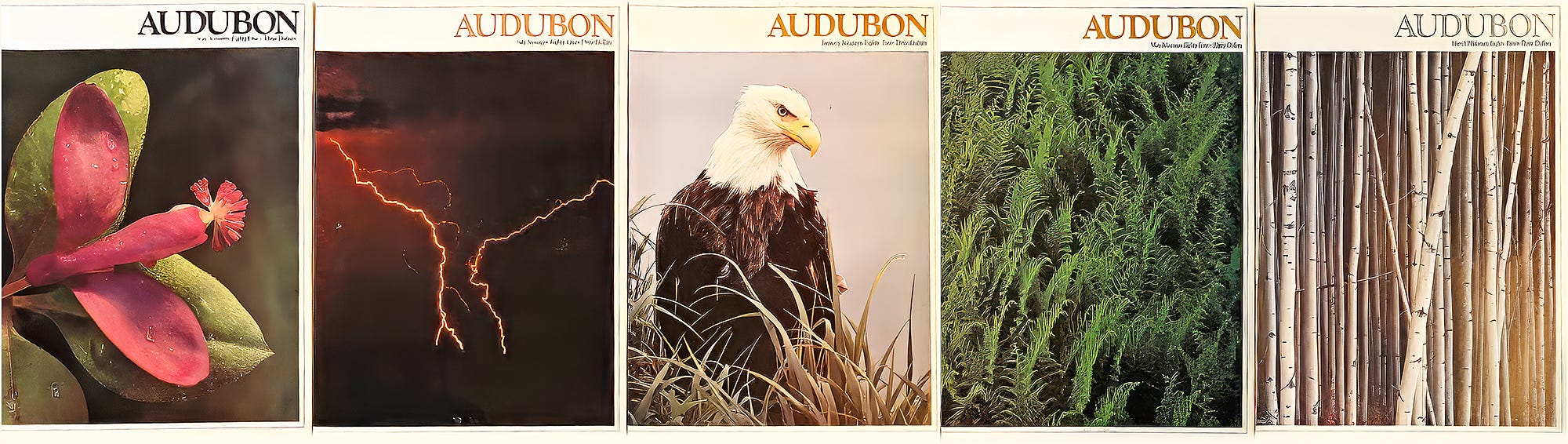
For roughly two decades beginning in 1966, Audubon magazine was something genuinely rare: a publication that treated the natural world as a subject worthy of the finest writing, photography, and design that American journalism could produce. Under the editorship of Les Line, who helmed the magazine until 1991, Audubon was not merely the house organ of a conservation organization. It was, by nearly any measure, one of the most beautiful and intellectually serious magazines published anywhere in the world.
Line arrived with an editor’s instinct for the exceptional. He understood that great nature photography was not decoration but argument—that a single image of a peregrine falcon banking over an industrial skyline could accomplish what pages of advocacy never could. He recruited photographers accordingly: Eliot Porter, whose dye-transfer color prints had already redefined landscape photography; Ernst Haas, the Magnum master of motion and color; and a constellation of wildlife photographers who were then pushing the field toward genuine artistry. The printing quality Line insisted upon was itself a kind of editorial statement—the colors true, the paper rich, the reproductions treated as ends in themselves.
Audubon of the 1970s and 1980s
The writing matched the imagery. As editor, Les Line published Peter Matthiessen, Archie Carr, John Hay, David Quammen, Ted Williams, and Edward Hoagland, among many other writers who brought literary seriousness to natural history at a moment when the genre was finding its footing as a legitimate American form. These were not assignments dressed up in earnest organizational prose. They were essays and reported pieces that could hold their own in any company, in any venue.
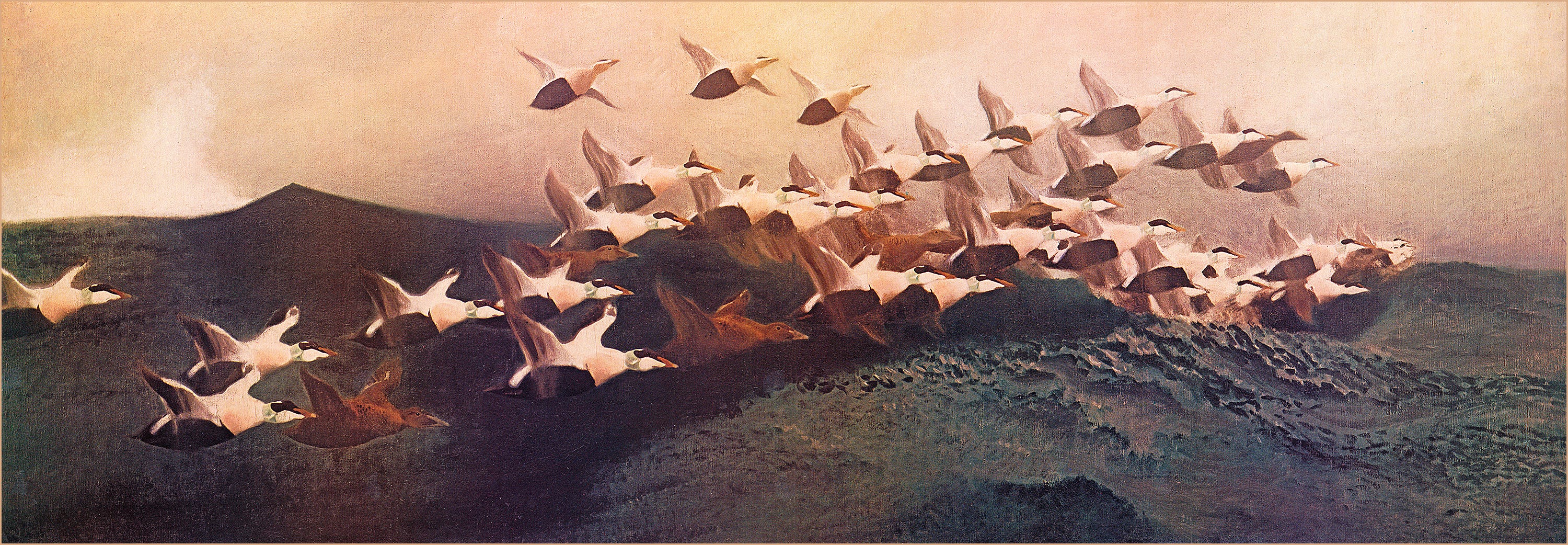
What Line understood, and what his successors apparently did not, was that a membership magazine need not be captive to its membership’s most predictable appetites. He trusted readers to follow good work wherever it led, and readers responded: circulation climbed, and the magazine’s reputation extended well beyond the Audubon Society’s natural constituency.
The decline of Audubon was like Hemingway’s joke about bankruptcy: gradual, and then sudden. By the 1990s and into the 2000s, Audubon had retreated into the familiar territory of the organizational magazine—competent, earnest, and entirely forgettable. The photography became illustrative rather than revelatory. The writing grew dutiful. The design lost its confidence. Conservation messaging, always present under Line, has now crowded out the sense of wonder that had made the message worth receiving.
What Audubon was under Les Line remains a lesson about editorial ambition: that a magazine about the natural world can be, without apology, as demanding and beautiful as the subject deserves.