
The Lockheed Constellation
Queen of the propeller age

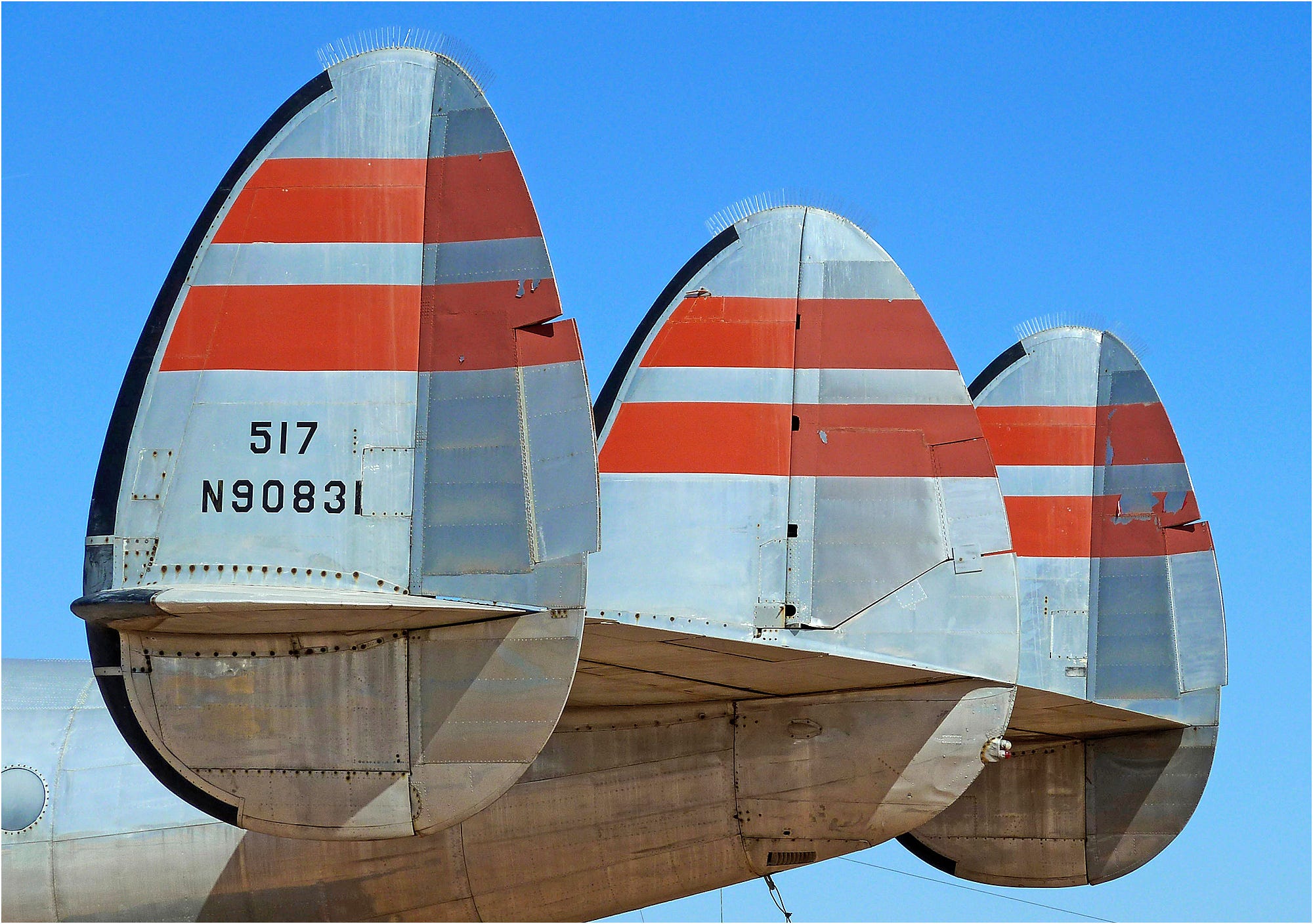
In the late 1950s, when I was seven years old, my father, a U.S. Army soldier reporting to a new assignment, led our family across the tarmac at San Francisco International Airport toward the most extraordinary aircraft I had ever seen. The Lockheed Constellation seemed to fill the sky even sitting still, its burnished aluminum skin gleaming in the California sun. But it was the tail that’s burned into my memory: not one vertical stabilizer, but three, rising from the fuselage like the flukes of some great silver whale. I had never imagined such a thing. We would board this improbable, magnificent machine, stop in Hawaii, and then fly on across the vast Pacific Ocean to Okinawa, Japan. Standing there on the tarmac as a small boy, gripping my father’s hand, I felt equal parts wonder and terror. Could a plane really fly with a tail like that?
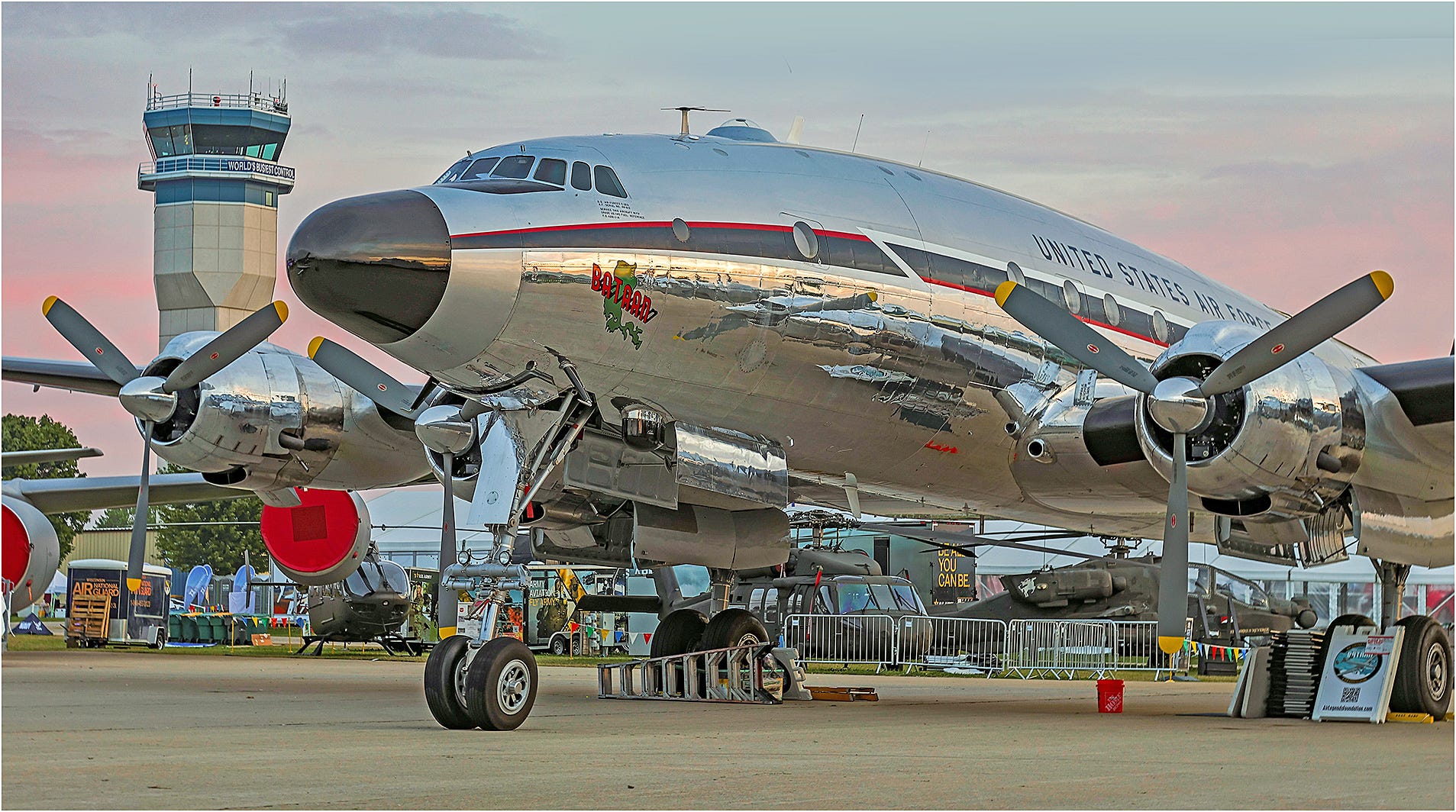
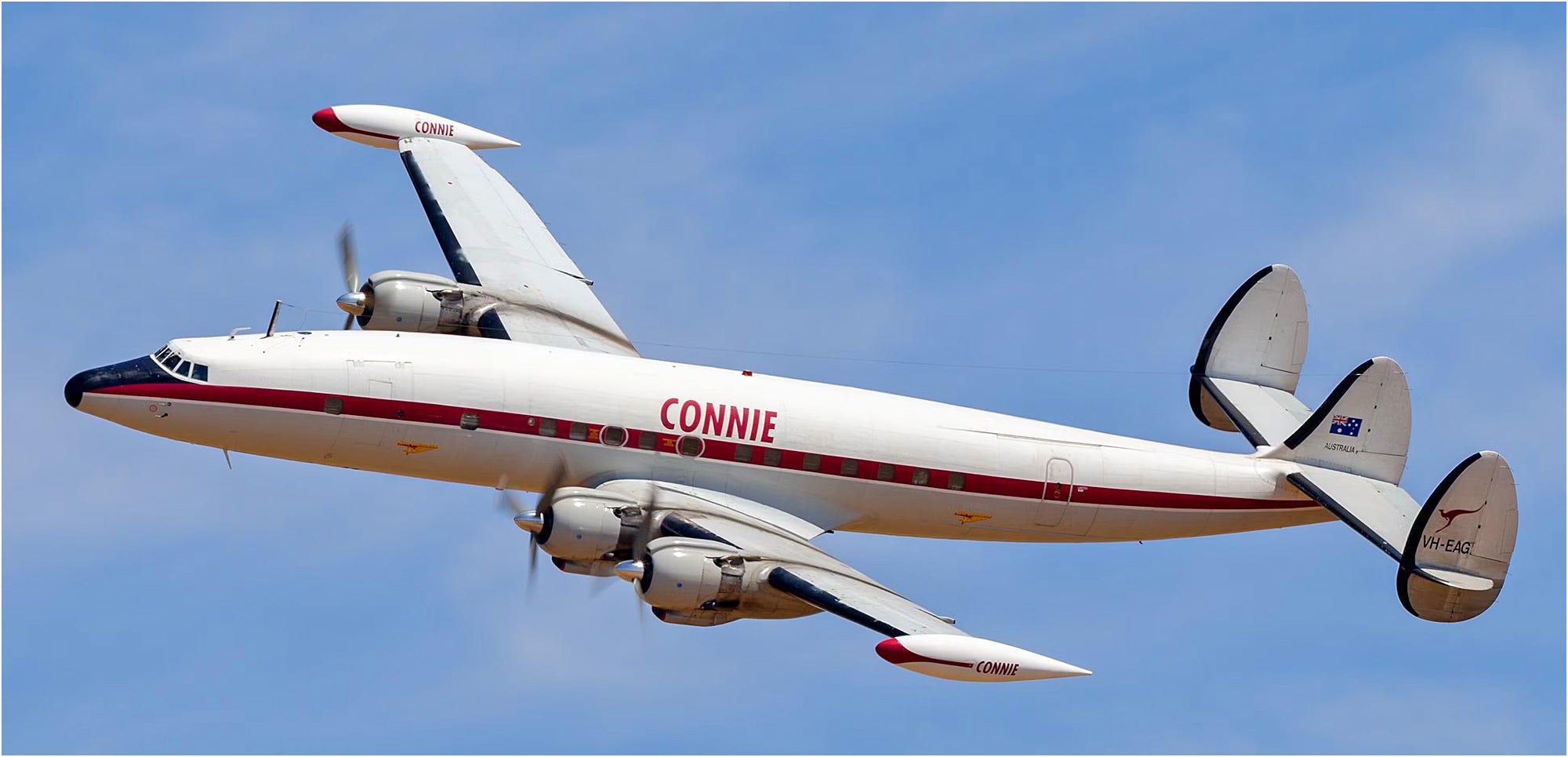
No airliner before or since has matched the sheer sculptural beauty of the Lockheed Constellation. With its sinuous, dolphin-shaped fuselage, iconic triple tail, and proud stance on impossibly long landing gear, the “Connie” remains the most aesthetically celebrated transport aircraft in the history of flight. But the Constellation was far more than a pretty silhouette. Born from a clandestine wartime collaboration between Howard Hughes and Kelly Johnson, it was, for more than a decade, the fastest, highest-flying, and most technically advanced airliner in the sky. Between 1943 and 1958, Lockheed built 856 Constellations at its Burbank plant. They carried millions of passengers across every ocean, inaugurated the first scheduled round-the-world airline service, and gave Orville Wright his final ride aloft.
A secret meeting in Beverly Hills
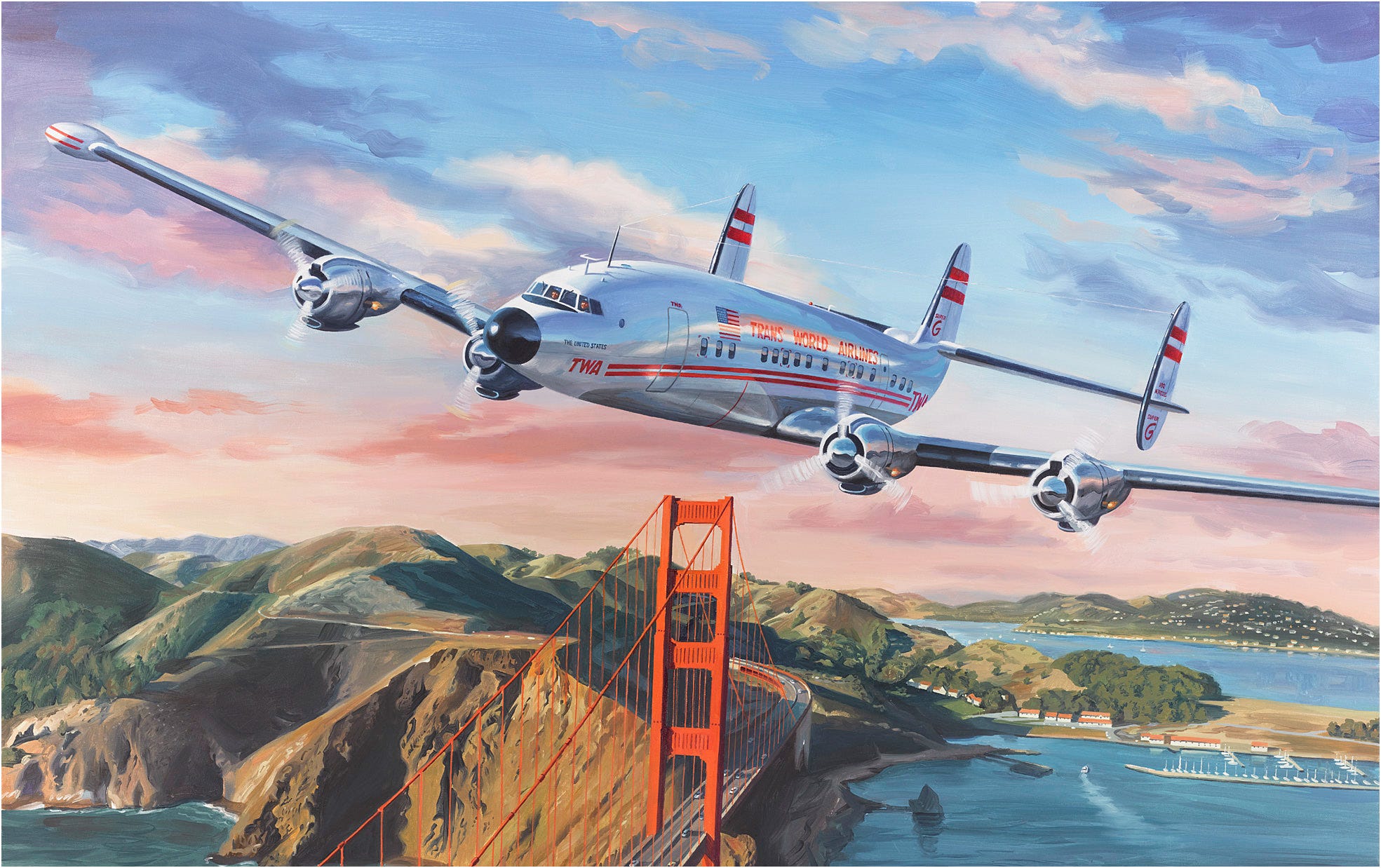
The Constellation’s story begins in the summer of 1939, when Howard Hughes, who had recently acquired control of TWA, summoned Lockheed’s leadership to a Beverly Hills hotel with audacious requirements. Hughes and TWA president Jack Frye wanted an airliner that could carry forty-four passengers coast to coast nonstop, cruise at 300 miles per hour at 20,000 feet, in a pressurized cabin. Nothing remotely like this existed. The Douglas DC-3, then the industry standard, cruised at barely 170 miles per hour. Hughes demanded total secrecy: code names were assigned, and Lockheed was forbidden to sell the design to any competitor until TWA had received 35 aircraft. He placed an order for forty airframes at eighteen million dollars, the largest single civilian aircraft order to that date.
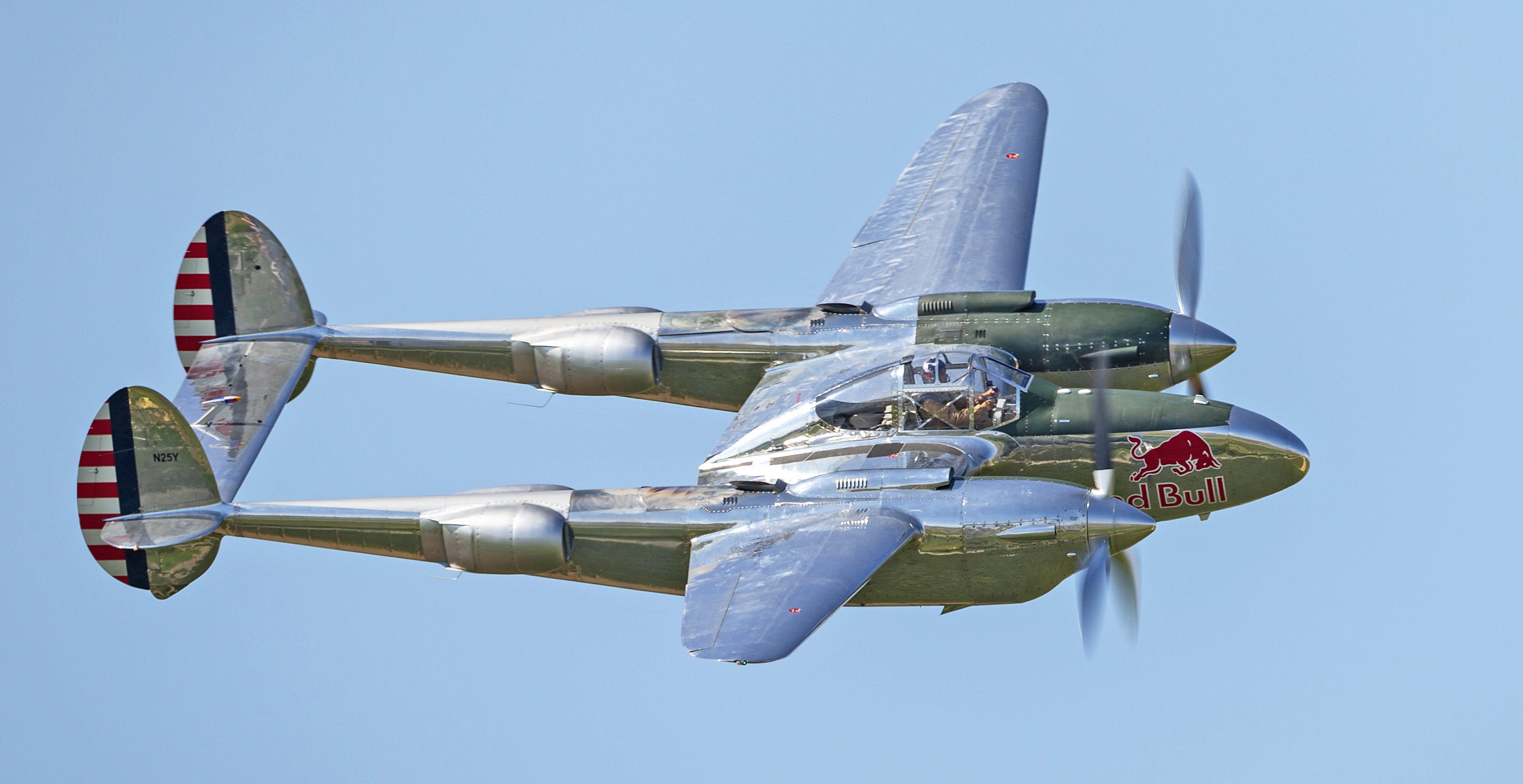
Kelly Johnson, already famous for the P-38 Lightning, took charge of aerodynamic design. Chief engineer Hall Hibbard managed structures and systems. The two men had a testy relationship with Hughes, whose late-night habits and obsessive secrecy exhausted them. Yet together they produced an aircraft that would dominate civil aviation for more than a decade.
A fighter’s wing, scaled for the skies
One of the Constellation’s most remarkable features is hidden in plain sight: its wing descends directly from the P-38 Lightning’s. Johnson’s team scaled up the fighter’s proven airfoil profiles for the vastly larger airliner, the wingspan growing from 52 feet to 123 feet, wing area expanding fivefold. The result was an efficient, high-aspect-ratio wing giving the Constellation a top speed above 375 miles per hour—faster than a Japanese Zero fighter.
The triple tail arose from equally practical engineering. Hughes had insisted the aircraft fit inside TWA’s existing hangars. The exceptionally tall landing gear, needed to clear the massive 15-foot propellers, meant a conventional single fin would have exceeded hangar door limits. Three shorter fins solved the problem — but also offered aerodynamic advantages. The outboard fins sat directly in the engine slipstream, boosting rudder effectiveness at low speeds and providing yaw control after engine failures. They also acted as endplates on the horizontal tail, improving stability. What began as a pragmatic concession became one of the most distinctive and functionally elegant solutions in airliner history.
From wartime transport to the flagship of the world’s airlines
The first Constellation flew on January 9, 1943. The military commandeered the production line after Pearl Harbor, but only twenty-two C-69s (the U.S. Army’s designation for the Constellation) were completed before the war ended. On April 17, 1944, Hughes and Frye flew the second production aircraft from Burbank to Washington in six hours and fifty-seven minutes, a transcontinental speed record. Stopping at Wright Field, they collected Orville Wright for what proved to be his last flight. The elderly pioneer reportedly marveled that the Constellation’s wingspan exceeded the distance of his first powered flight at Kitty Hawk.
TWA inaugurated transatlantic service between New York and Paris in February 1946. Successive variants extended range and power: the L-749 of 1947 could fly beyond 4,000 miles, making reliable transatlantic crossings a reality. On June 17, 1947, Pan Am used an L-749 to inaugurate the first scheduled round-the-world airline service.
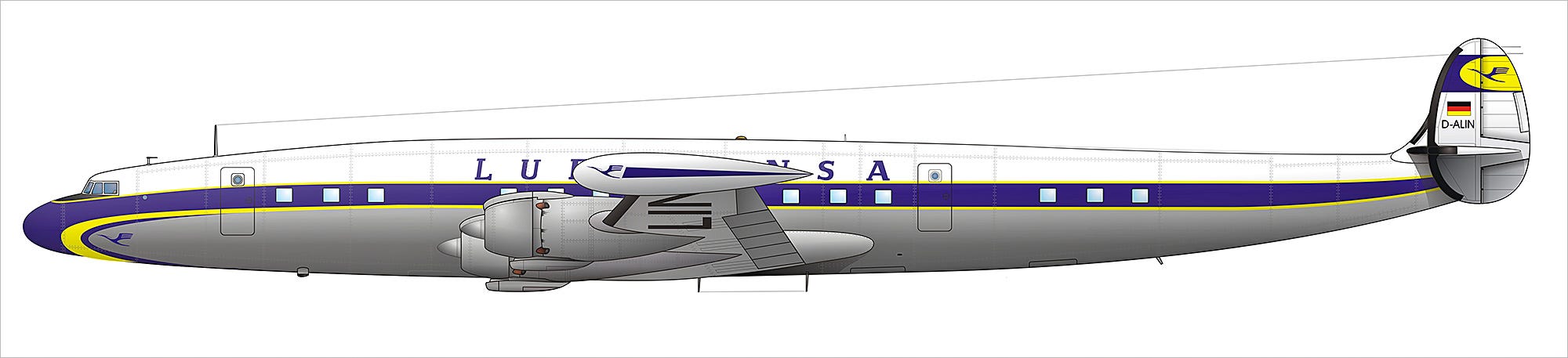
The L-1049 Super Constellation, with its body stretched eighteen feet and powered by Wright Turbo-Compound engines producing 3,250 horsepower, became the backbone of long-haul aviation. TWA, KLM, Qantas, and Air France flew it across oceans. The final variant, the L-1649A Starliner, carried passengers nonstop from Los Angeles to London, 5,420 miles in eighteen and a half hours, the longest nonstop piston-engine passenger flights ever operated. But only forty-four were built before the Boeing 707 entered service in October 1958, rendering every propeller-driven airliner obsolete almost overnight.
An aircraft that transcended its era
The Constellation was the last great expression of a belief that an airliner could be both technologically supreme and breathtakingly beautiful. Its fuselage is a compound-curved shell whose cross-section changes continuously from nose to tail. No two frame sections were identical, which was staggeringly expensive to manufacture, and has never been attempted since. Aviation writers have called it “the Mona Lisa of the skies.”
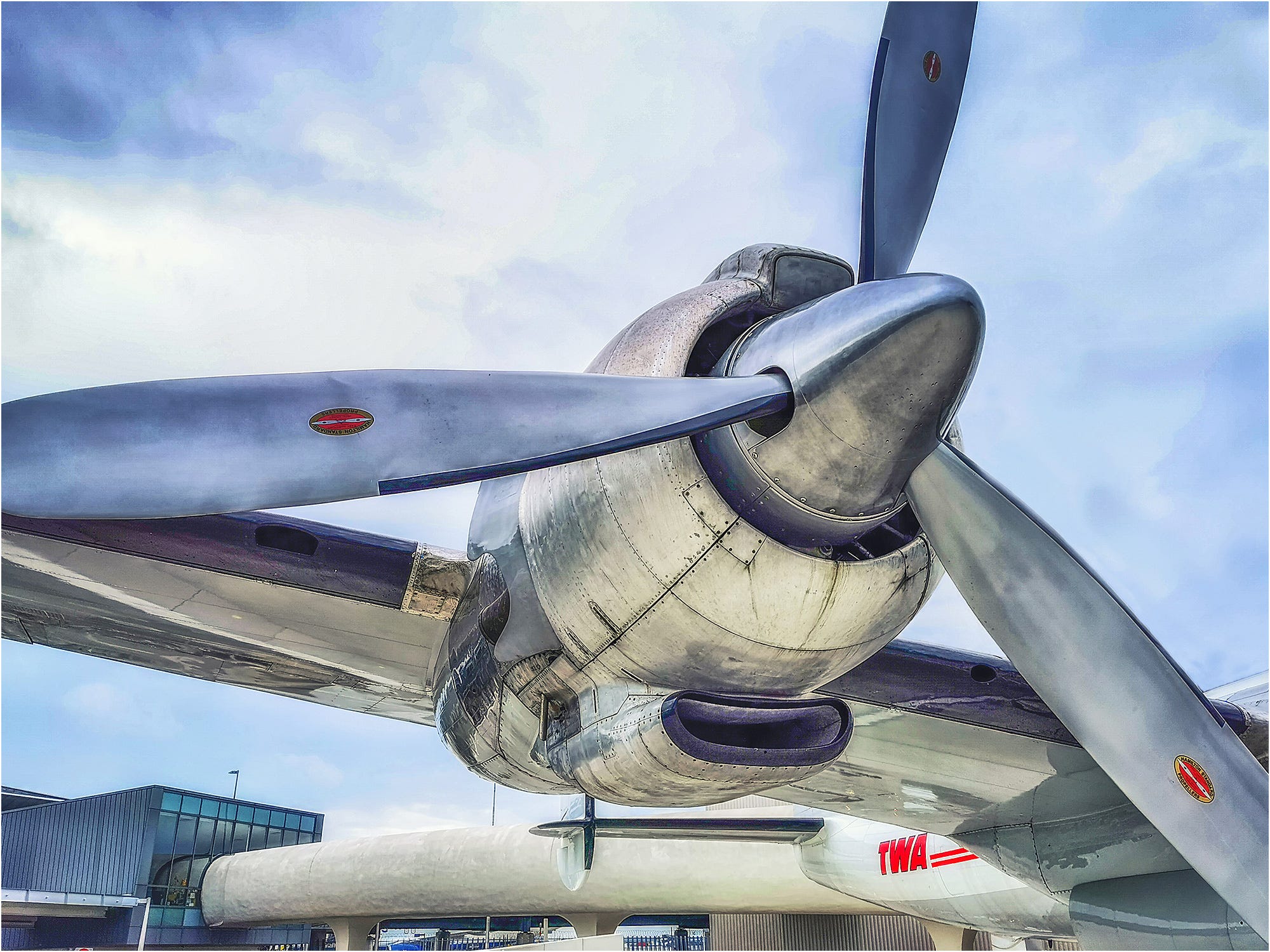
Of 856 built, roughly fifty-five survive worldwide. The Smithsonian, Pima Air & Space Museum, and Le Bourget each display examples. A restored Starliner serves as the cocktail lounge at the TWA Hotel at JFK. Lufthansa is completing a major restoration for Frankfurt Airport, timed to open in spring 2026 as the centerpiece of the airline’s centennial.
The Constellation carried heads of state and Hollywood stars, pioneered pressurized high-altitude travel, and linked continents before the jet age made such flights routine. No subsequent airliner has inspired the same depth of devotion — proof that Lockheed achieved something the economics of modern aviation will almost certainly never permit again: an airliner whose form was as unforgettable as its function.

Thank you! Brings back my childhood. My dad was a USAF navigator and flew with EC 121’s in Norway/NATO, also spent a number of years flying with the 552nd Airborne Early Warning and Control Wing out McClellan AFB in Sacramento. We met him on the light line after a long mission “somewhere”, many, many times. Living in off base housing, not far from the end of the runway, I felt lucky being able to watch these and other aircraft come and go daily. Great memories.