
Robert Verity Clem
The quiet master of American bird painting

My friend and mentor Professor Noble S. Proctor (1942–2015), of Southern Connecticut State University, was a world-class birder and naturalist who led international birding tours for decades. In the mid-1970s, I took his Introduction to Ornithology course as an undergraduate at SCSU, and, instead of a term paper, I produced my first bird paintings. Noble saw some promise in the paintings and, one afternoon, took me into downtown New Haven to a tiny art-and-frame shop on York Street, Merwin’s Art Shop. In the back of the narrow, crowded store, there was a vertical bin of plastic-wrapped art pieces, which I just assumed were matted prints for student dorm rooms or inexpensive house decorations. Instead, the pieces in the bin were luminous, staggeringly beautiful original watercolors by a guy I had then never heard of, Robert Verity Clem. Clem was a Cape Cod artist and an acquaintance of Noble’s, and was famously reclusive. Merwin’s Art Shop was one of only two places in the 1970s where you could reliably find a Clem original, and thus I became a regular visitor to Merwin’s, as it was my only access to Clem’s work. Even in the 1970s, Clem’s paintings were handsomely priced and sold quickly to knowledgeable collectors, so it paid to visit often, as the 6–8 Clem’s usually on offer turned over quickly. As a young, hopeful bird artist in the 1970s, people would ask me who I most admired and wanted to emulate, and I’d answer Robert Verity Clem. That always drew a blank stare. Who?
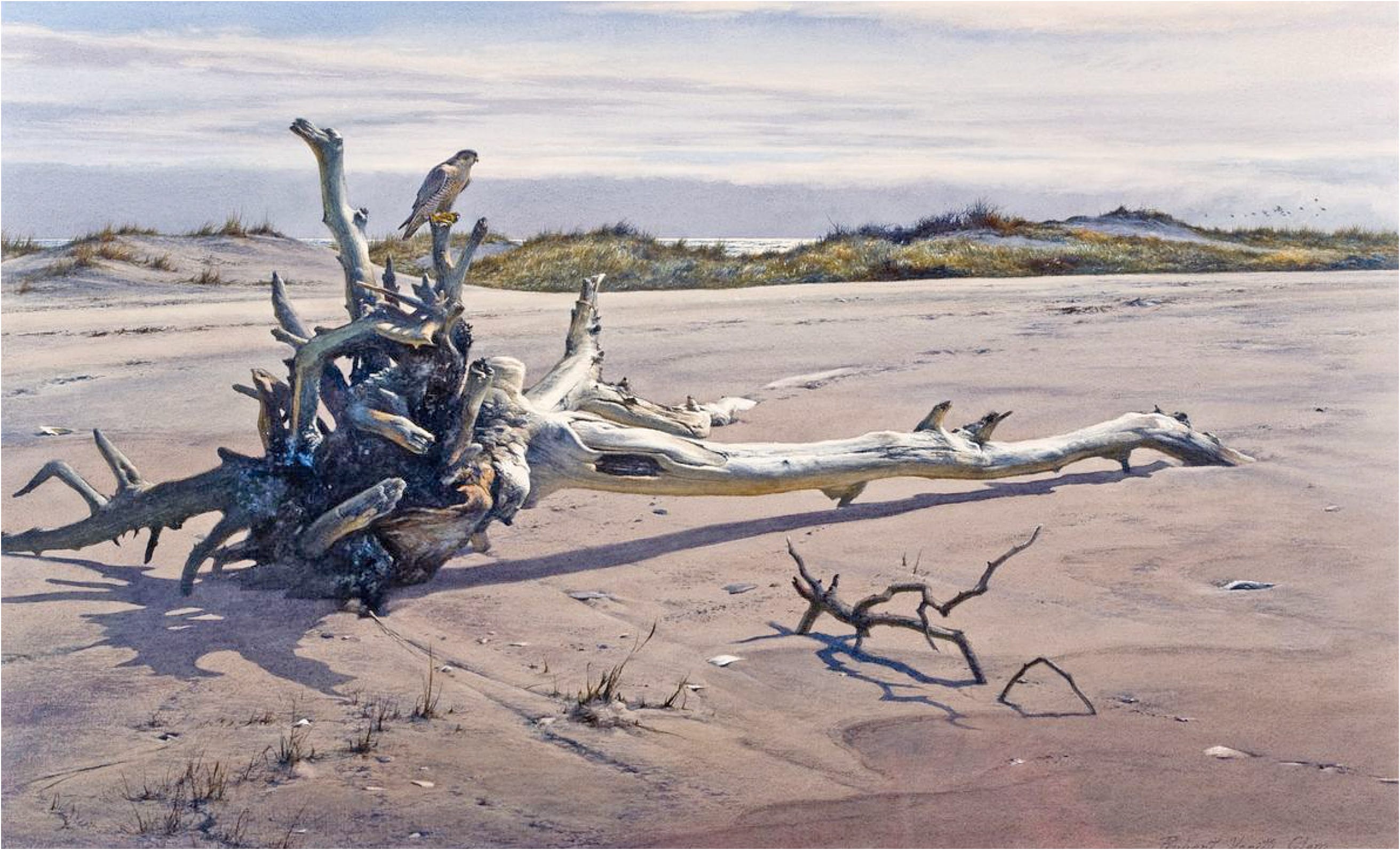
Robert Verity Clem (1933–2010) was among the finest bird painters America ever produced. Yet he remains largely unknown outside a devoted circle of wildlife artists and collectors who regard him with near-reverence. Self-taught, reclusive, and stubbornly independent, Clem spent more than half a century on Cape Cod creating watercolors that placed birds not as isolated specimens but as living presences within light-filled, breathing landscapes — an approach that distinguished him from virtually every other wildlife artist of his era. His single major published work, the illustrations for Peter Matthiessen’s The Shorebirds of North America (1967), was immediately hailed as a masterpiece of natural history art. That he never published another book, and rarely exhibited, explains the paradox of Clem’s reputation: universally acclaimed by those who know his work, yet almost invisible to the broader art and natural history worlds.
A self-taught prodigy from southern New England
Robert Verity Clem was born on October 9, 1933, in Fall River, Massachusetts, the son of Wendell Phillips Clem and Edith Verity Clem. He grew up in Hamden, Connecticut, where proximity to Yale University proved decisive for his artistic formation. Clem never received formal art training. Instead, he educated himself by studying the bird illustrations of Louis Agassiz Fuertes (1874–1927), the great Cornell ornithological painter who became, as Clem’s friends called him, his “ghost mentor.” (As Clem later became mine.) Clem absorbed principles of landscape painting by watching muralists and habitat background painters at work in the Yale Peabody Museum of Natural History, just blocks from his childhood home. The combination — Fuertes’s mastery of avian form and the Peabody painters’ command of environmental context — fused in Clem’s mind into a singular artistic vision.
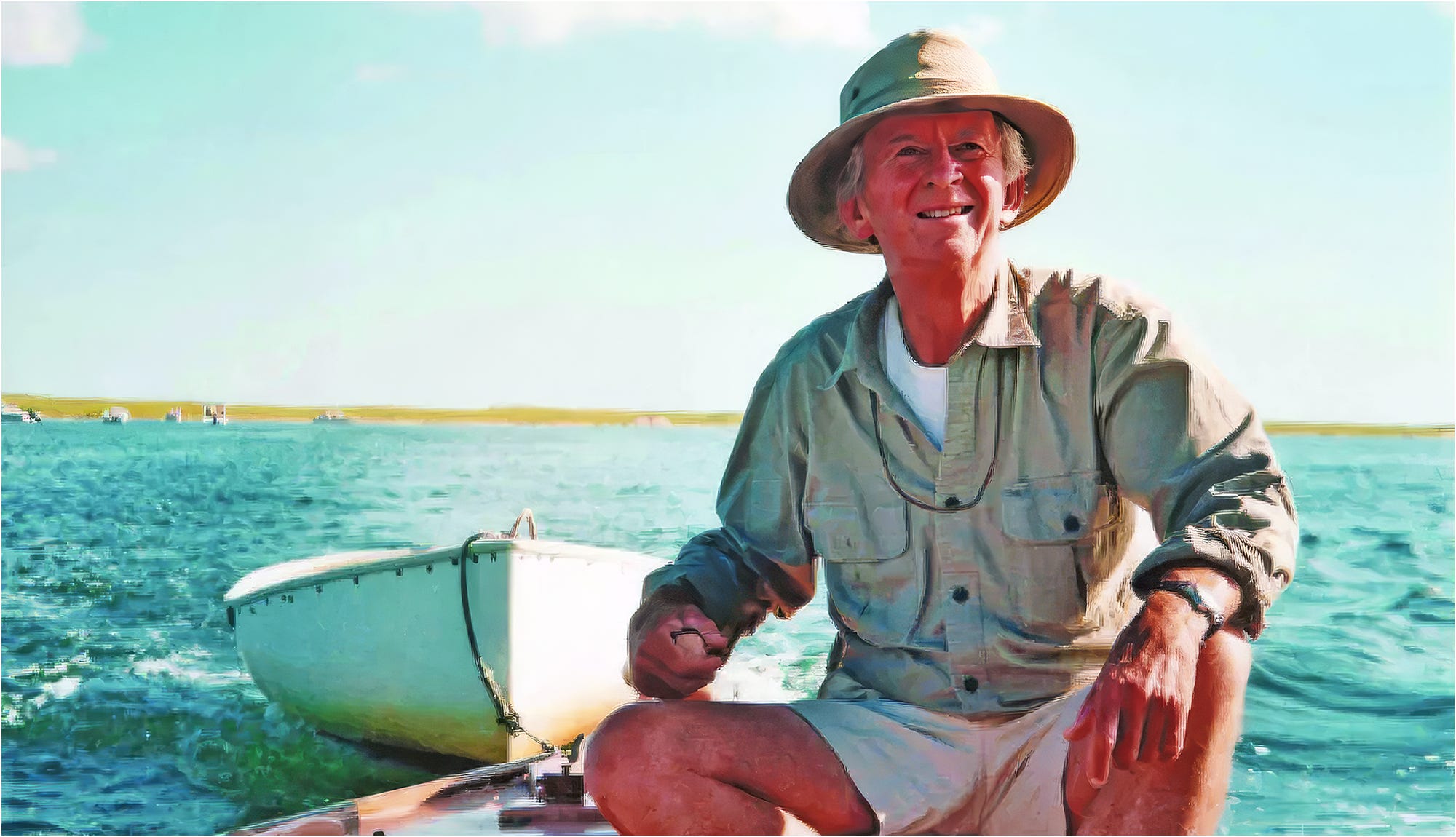
His talent emerged early. Around 1949, at age sixteen, the Berkshire Museum in Pittsfield, Massachusetts, organized his first solo exhibition, making him the youngest artist ever to show there. A local critic noted that Clem “showed a remarkable start in a difficult specialty.” By 1951, he was producing accomplished watercolors. In 1955, the industrialist and philanthropist Julius Fleischmann gave the young painter a career-shaping commission to travel to Naples, Florida, to paint birds in Fleischmann’s private aviary. This early patronage helped establish Clem’s reputation within elite collecting circles and connected him with the world of institutional ornithology. He contributed illustrations to S. Dillon Ripley’s 1957 article on the Horned Coot in Yale’s Postilla journal and to George E. Watson’s 1962 article on the Spotted Rail in The Wilson Bulletin.
The landmark shorebirds of 1967
Clem’s defining early achievement was his illustration of The Shorebirds of North America, published by Viking Press in 1967. The monumental volume was conceived and edited by Gardner D. Stout, president of the American Museum of Natural History and former chairman of the National Audubon Society. Stout assembled an extraordinary team: Peter Matthiessen wrote the lyrical narrative text, Ralph S. Palmer contributed rigorous species accounts, and Clem created 32 full-page color plates depicting 75 species of North American shorebirds, plus additional black-and-white drawings.
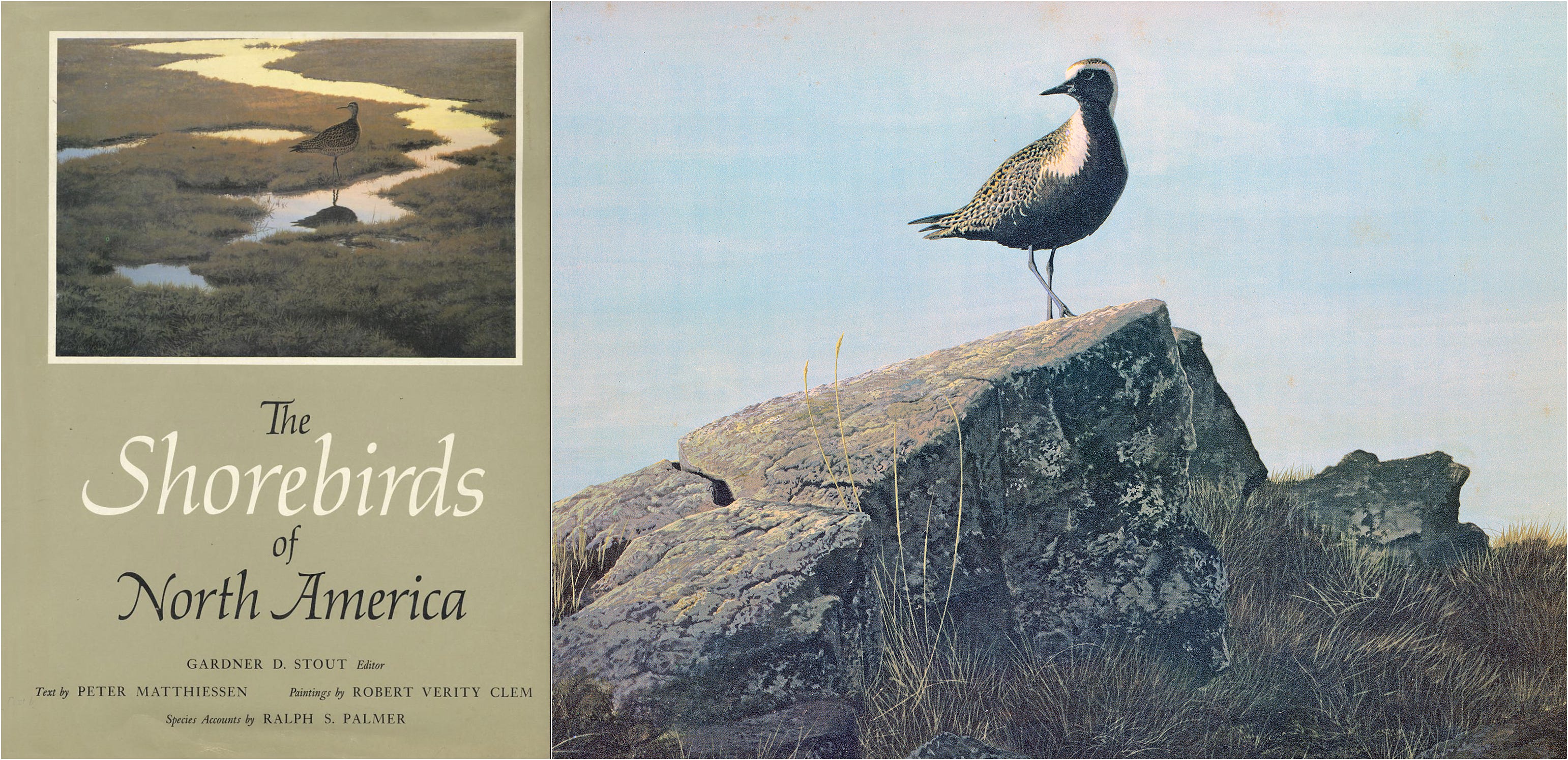
For the project, Clem traveled from his Cape Cod home to shorelines across the continent — California, Texas, New Jersey, and beyond — spending untold hours observing birds through binoculars and a telescope before composing his paintings in opaque watercolor (gouache). “Ninety percent of what I do is observing,” he said, “looking at birds for countless hours.” The resulting plates transcended the conventions of ornithological illustration. As wildlife artist Sean Murtha later wrote, “these are not mere profiles with scraps of habitat for scale and context.” Instead, each plate was a fully realized painting in which natural poses, atmospheric light, and lovingly rendered habitats combined to evoke the living experience of encountering shorebirds on a mudflat or beach. Robert Peck of the Academy of Natural Sciences, Philadelphia, which holds the original paintings, said simply: “Every time I see the originals, they take my breath away.”
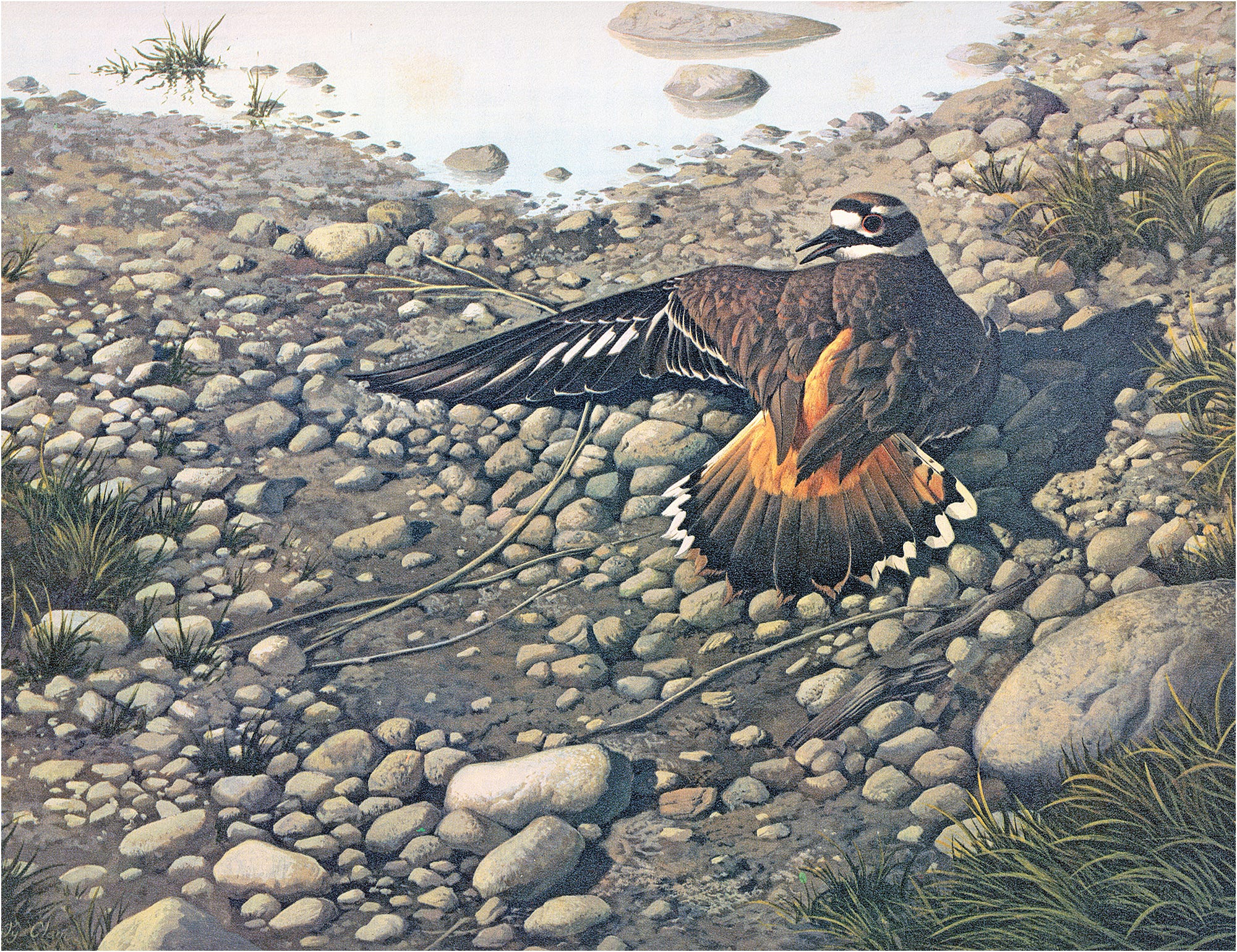
The Shorebirds book was recognized immediately as a landmark in the history of bird books. Roger Tory Peterson praised Matthiessen as “a superb writer.” Writer John Hay, reviewing for Natural History magazine, called the work “a mosaic of fascinating information, of observation and description expertly placed.” A deluxe edition of 350 copies, signed by all four contributors, became a prized collector’s item. Matthiessen later revised and expanded his text as The Wind Birds, published by Viking in 1973 with new black-and-white illustrations by Robert Gillmor (not Clem’s color plates), and reissued in paperback by Chapters Publishing in 1994. But it is the original deluxe 1967 folio, with Clem’s paintings, that remains the definitive edition.
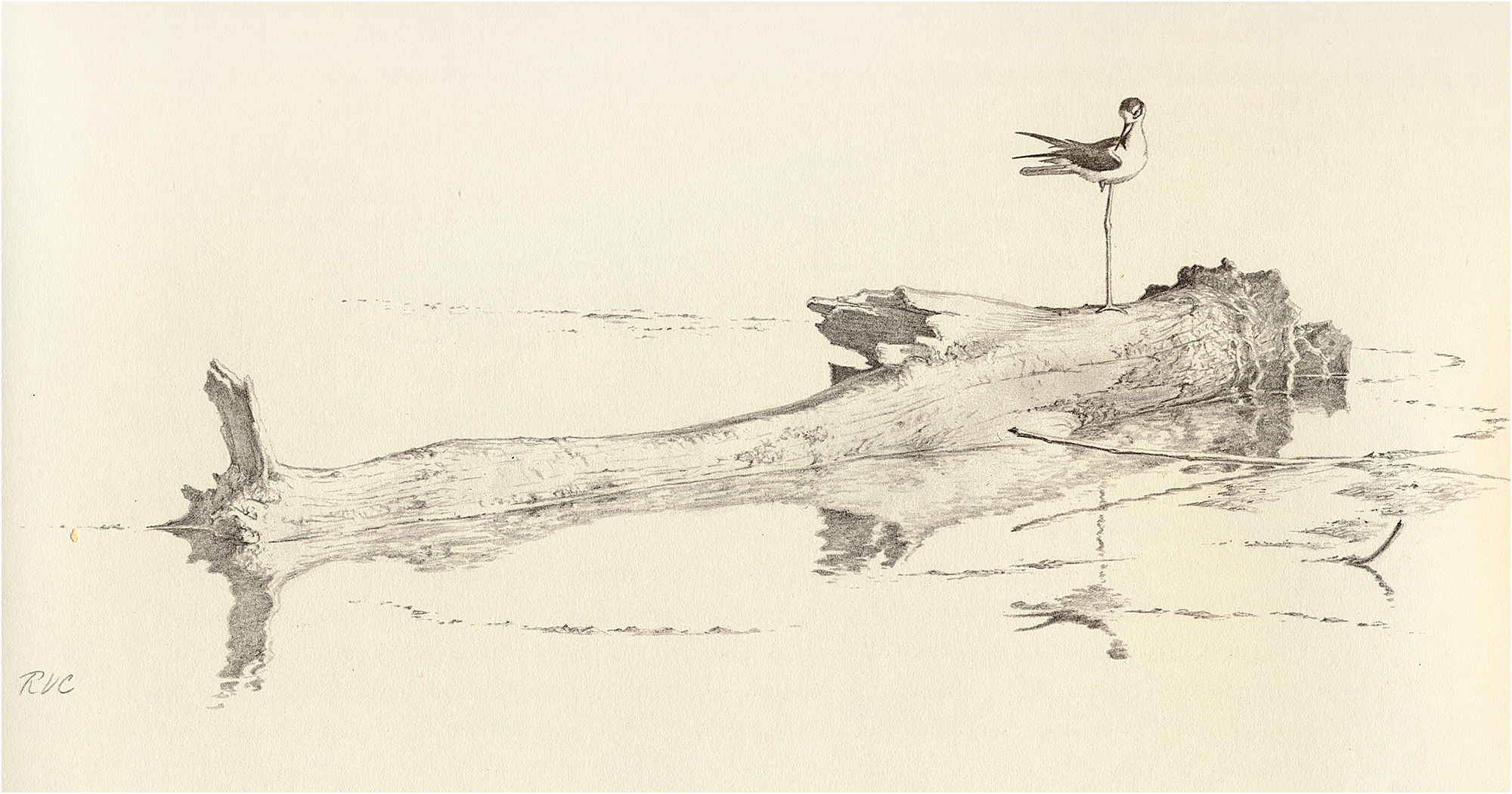
Shorebirds of North America is long out of print, but it is easily available today as a used book on Amazon and elsewhere. A word of warning: Don’t be disappointed by the murky, mediocre printing that’s typical of the mass-produced version of the book. By modern standards, the Clem plates don’t exactly glow, as color printing has vastly improved in the 59 years since Shorebirds was published in 1967. Don’t judge the Clem plates by today’s standards, but do pay close attention to the wonderfully accurate and sensitive gouache depictions of the birds.
Why did Clem withdraw from publishing?
The Shorebirds book should have launched Clem into national prominence. Instead, it drove him away from publishing entirely. The editors had severely cropped his paintings to fit the page layout, cutting away the expansive environmental settings that Clem considered essential to each composition. He was devastated. From that point forward, he refused all book illustration projects, a decision that kept his work largely out of public view for the remaining four decades of his life. This self-imposed obscurity is the central fact of Clem’s career — and the primary reason his fame never matched his talent.
Five decades of painting on Cape Cod
Clem settled in Chatham, Massachusetts, on the outer elbow of Cape Cod, where he lived and worked for more than fifty years until his death. He became a fixture of the town and was often seen driving his station wagon to South Beach, piloting his wooden double-ender boat, or walking the flats of Monomoy and Morris Islands with binoculars around his neck. He was a trustee of the Chatham Conservation Foundation and deeply committed to preserving the coastal landscapes he painted.
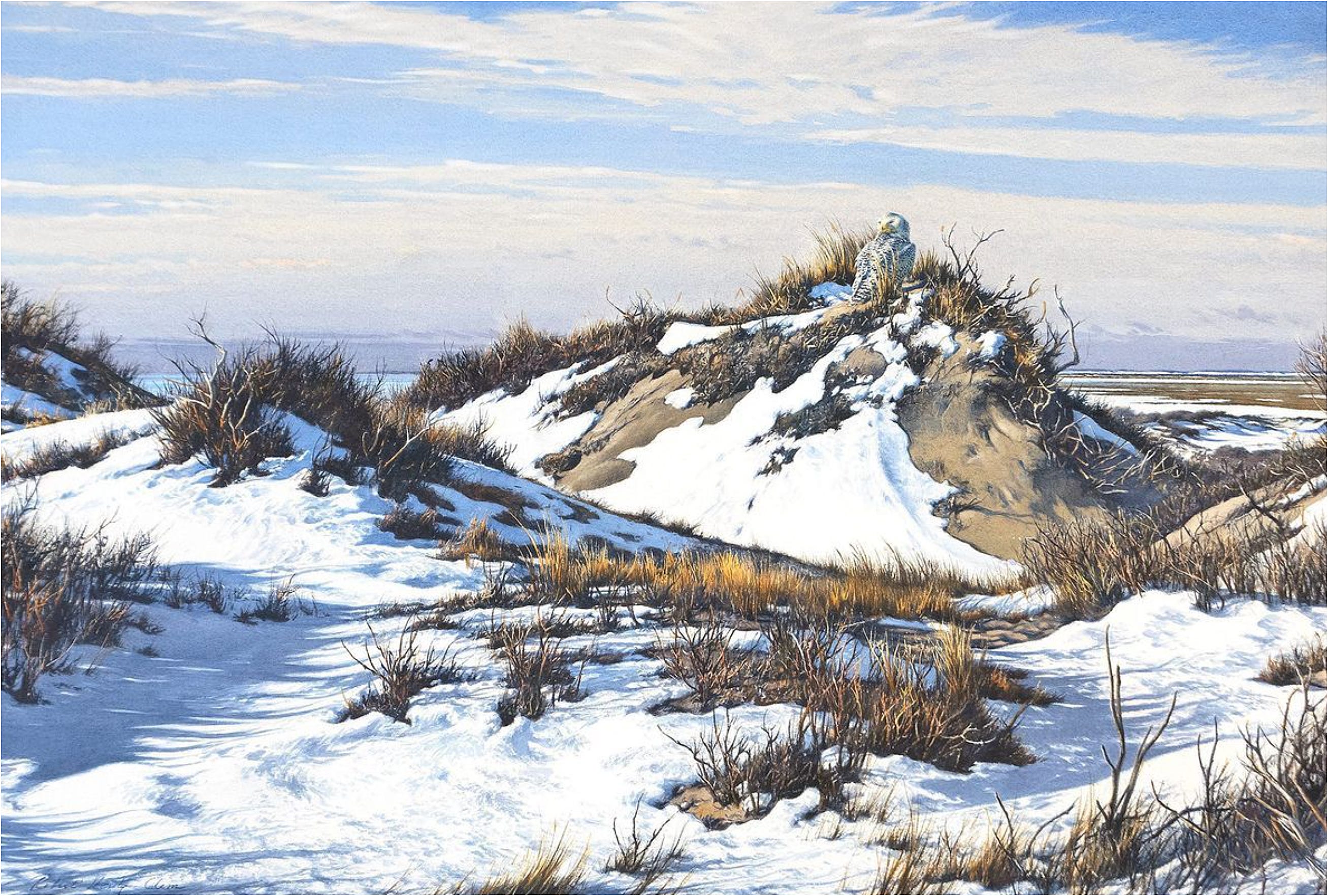
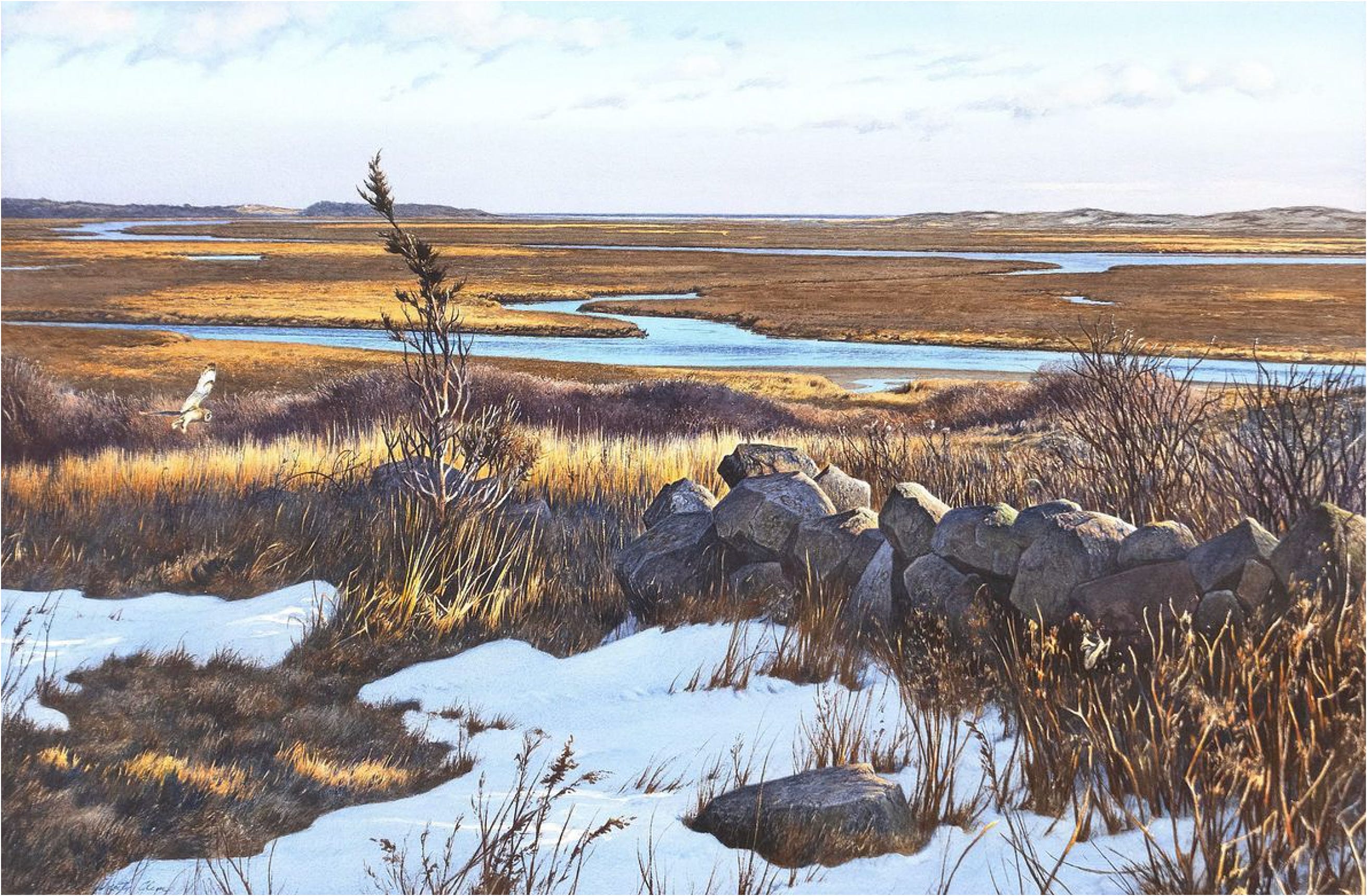
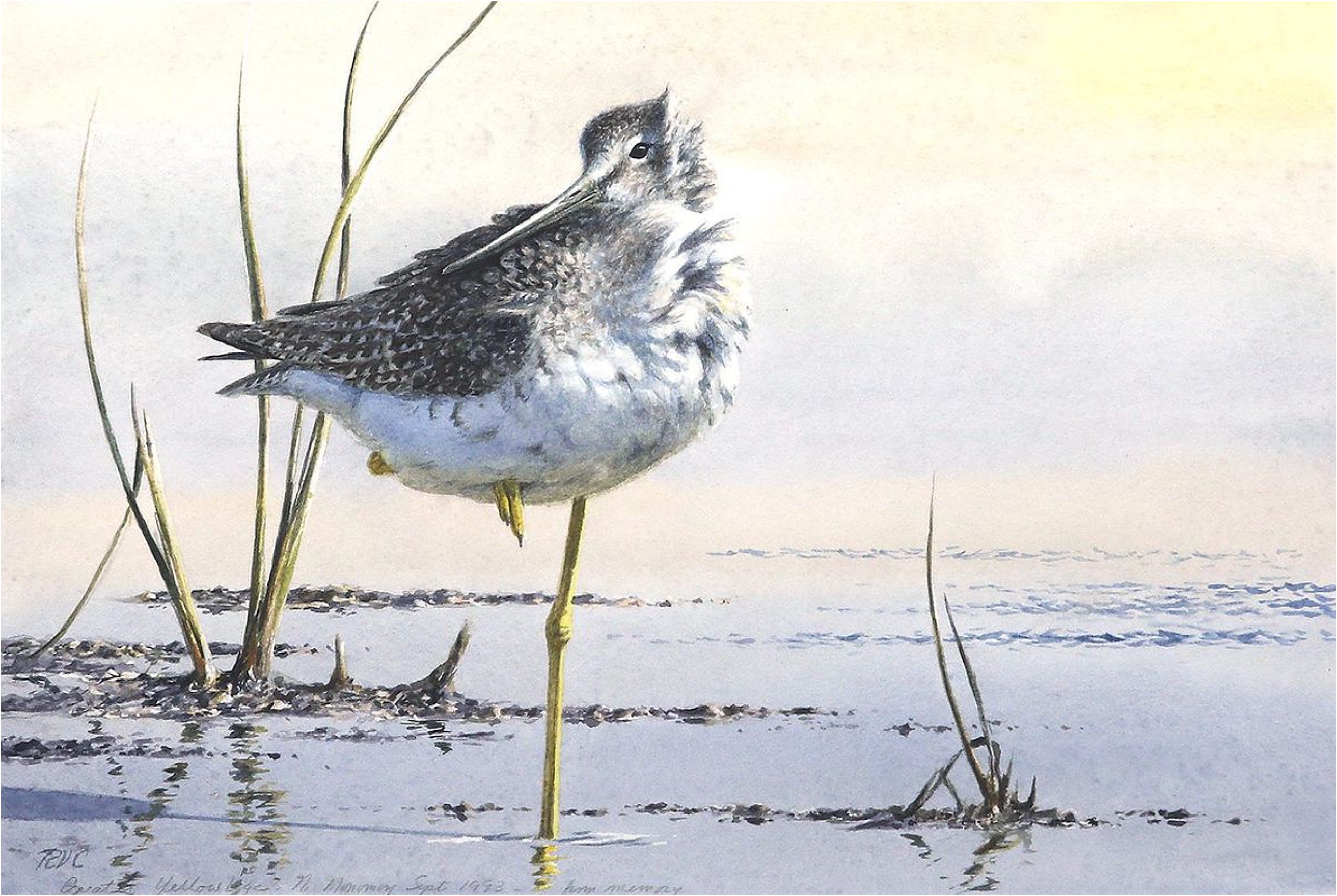
During the 1970s, Clem transitioned from gouache to working exclusively in transparent watercolor, developing a technique of remarkable subtlety. He would begin by laying down rapid, neutral-gray brushstrokes in a mosaic pattern, then, once dry, he applied thin washes of blues and browns over the gray underpainting. He used no preliminary pencil work, no photographs, and no specimens. All light emanated from the paper’s white; in his later career, he never used opaque white paint. The result was an image that appeared simultaneously precise and atmospheric, detailed yet suffused with air and light. “I want to show birds in all the attractive situations in which they are found, as they are seen, using the play of light and shadow,” he explained.
His subjects ranged across the avifauna of the Cape and beyond — shorebirds, raptors (especially falcons and gyrfalcons, which he painted on trips to Iceland), crows, songbirds, and woodcock — but his true subject was always the relationship between creature and habitat. A Clem painting of sanderlings was equally a painting of wet sand, receding surf, and salt light. The landscape and natural habitats contributed equally to every composition, and this integration of bird and environment constituted his distinctive genius. He resented the art world’s habit of relegating bird painting to a separate category called “wildlife art,” believing his work belonged in the broader tradition of American landscape painting.
A cult reputation among the most discerning eyes
For decades, Clem’s paintings circulated primarily through a single gallery — Merwin’s Art Shop on York Street in New Haven, Connecticut, owned by Robert O. Muller, who assembled what became the largest private collection of Clem’s work. A loyal Cape Cod following awaited each new painting. But beyond these circles, Clem remained virtually unknown.
Among bird artists, however, his reputation bordered on legendary. Amy Montague, director of the Mass Audubon Visual Arts Center, stated, “If there were a pantheon of bird artists, Robert Verity Clem would be there.” Paul Donahue, an artist who knew Clem personally, wrote after his death: “The world lost one of the greatest bird painters of all time. If I could paint like any artist in the world, bird artist or otherwise, it would be him.” Donahue noted that Clem had “carefully studied Fuertes’s work, gleaned what he could from it, and moved on to an even greater mastery of the feathered form.” Painter Sean Murtha observed that while Clem “never achieved the wide recognition of some wildlife artists,” his name appears as an influence in the biographies of many better-known painters. His mentees and artistic descendants include Julie Zickefoose (NPR commentator and bird illustrator), Paul Donahue, Clare Walker Leslie, Cindy House, Barry Van Dusen, Jim Coe, Larry Barth, and Sean Murtha.
Exhibitions and institutional collections
Clem’s work entered several major institutional collections. The Academy of Natural Sciences of Drexel University in Philadelphia holds the original Shorebirds of North America paintings. The Museum of American Bird Art at Mass Audubon in Canton, Massachusetts, holds more than 30 Clem watercolors, along with his archive of correspondence and photographs. Additional Clem works are held by the New Britain Museum of American Art in Connecticut, the Leigh Yawkey Woodson Art Museum in Wausau, Wisconsin (renowned for its annual “Birds in Art” exhibition), and the Cincinnati Museum Center.
Major exhibitions of his work include “True to Life: Watercolors by Robert Verity Clem” at Mass Audubon (January–June 2000); “True to Life: The Art of Robert Verity Clem”, a forty-painting retrospective at the same institution (October 2011–January 2012), curated by Gigi Hopkins; and “The Raptor’s Eye: The Natural World of Robert Verity Clem” at the Atwood House and Museum in Chatham (2011–2013), which included a reconstruction of his studio. At auction, Clem’s watercolors typically sell in the $3,000–$12,000 range, with strong results at Copley Fine Art Auctions, Bonhams/Skinner, and Guyette & Deeter. A sanderling and piping plover watercolor at Copley in 2017 sold for $6,600, more than quadrupling its high estimate.
Robert Verity Clem died in his sleep on September 17, 2010, in Chatham, at age seventy-six. He is buried there in People’s Cemetery. His legacy rests not on fame but on an uncompromising artistic vision: that a bird painting should be a landscape painting, that the creature and its world are inseparable, and that the highest achievement in natural history art is to make the viewer feel present in the habitat alongside the bird. This idea, radical in its simplicity, has shaped a generation of wildlife painters. That Clem remains better known to working bird artists than to museum curators or the public is both the cost of his reclusive temperament and, perhaps, a guarantee that those who do discover his work experience a private revelation. As fellow artist Sean Murtha wrote: “Once discovered, Robert Verity Clem’s paintings will change you forever.”
References and online sources
Mass Audubon — Robert Verity Clem artist profile
Paul Donahue — tribute to Robert Verity Clem (2010)
Sean Murtha / The Feathered Brush, tribute and assessment
Bonhams — auction lot with detailed biography (Peregrine Falcon at Taughannock Falls)
Wikipedia — Robert Verity Clem
Canton Patch — “True to Life” exhibition announcement (2011)
Copley Fine Art Auctions — Clem lots
Paul Donahue tribute reprinted in Bird Observer, Vol. 38, Iss. 5 (2010)
The Birder’s Library — Shorebirds of North America review
10,000 Birds — review of the 2024 successor volume, with discussion of the 1967 original
Thank you! I had never heard of him before reading this. I will look for the shorebird book.
Thank you for this. I didn't know anything about Noble Proctor until now. My parents owned a copy of The Shorebirds of North America — I instantly recognized the cover — that I pored over in my early teens and I'm suddenly struck by how familiar his work feels.
But as a now-retired print publication art director, I'm also horrified how the terrible production values of a single book project caused his withdrawal and the loss of the wide-spread public recognition of his work.