
Rip Currents: The Ocean’s Hidden Danger
The deadliest threat on the beach is often invisible

If you swim on ocean beaches, it is critical to understand rip currents: what they are, how they form, and, most importantly, what to do if you are caught in one.
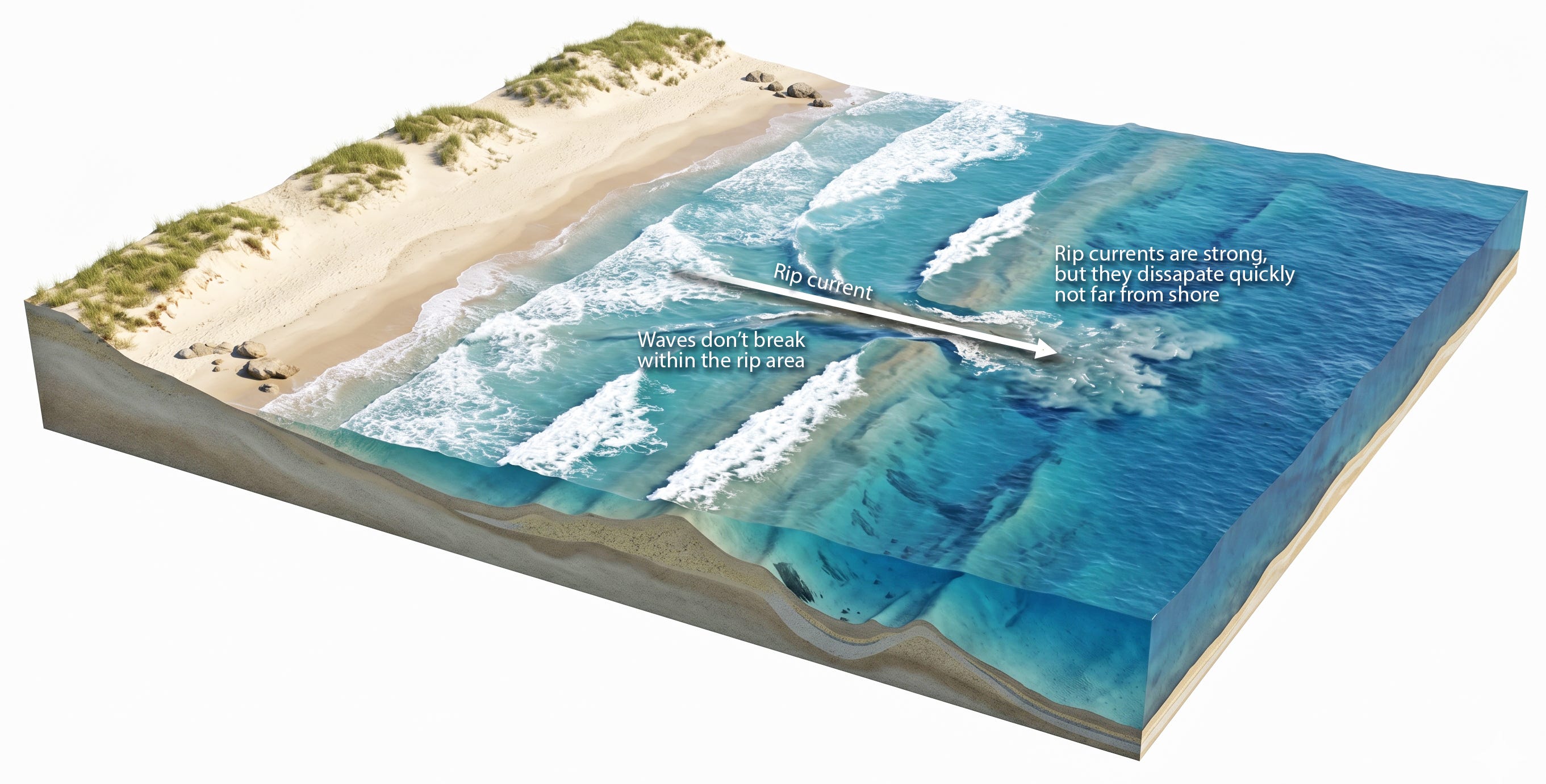
Rip currents (sometimes incorrectly called rip tides) form when powerful sets of waves drive more water up a beach than can easily drain away through the normal swash of waves. As each succeeding wave breaks and slides down the beach, the next wave blocks the backflow of water and raises the overall level of water on the beach. Eventually, too much water is piled well above the current tide level. To release this pent-up water, a swift current forms in a low spot or channel along the beach and drains the excess water out to sea. This channel of fast-moving water, usually running perpendicular to the shoreline, is a rip current.
Rip currents are powerful and can flow at three to five miles per hour—fast enough that even an Olympic swimmer could not make headway against one. According to the United States Lifesaving Association, rip currents kill approximately 100 people along U.S. beaches every year and account for over 80 percent of all lifeguard rescues. The National Weather Service has ranked rip currents the third-leading cause of weather-related deaths in the U.S. from 2012 to 2021—behind only heat and flooding—and in a typical year, rip currents kill more people than lightning, hurricanes, and tornadoes combined. Nearly all of those deaths result from the same fatal mistake: panic, fighting the current until exhaustion sets in, and the tired swimmer drowns.
My personal theory: One major reason the beach drowning toll remains so high may be a cruel trick of perception. Because rip currents flow through deeper channels, waves rarely break within them. To an inexperienced swimmer scanning the surf, these smooth, apparently quiet corridors of water look safer than the churning, foam-flecked surf on either side. This apparent calm is a trap. Tentative swimmers who deliberately choose these “gentler” spots to enter the water are wading directly into a swift outgoing current that can quickly sweep them beyond their depth.
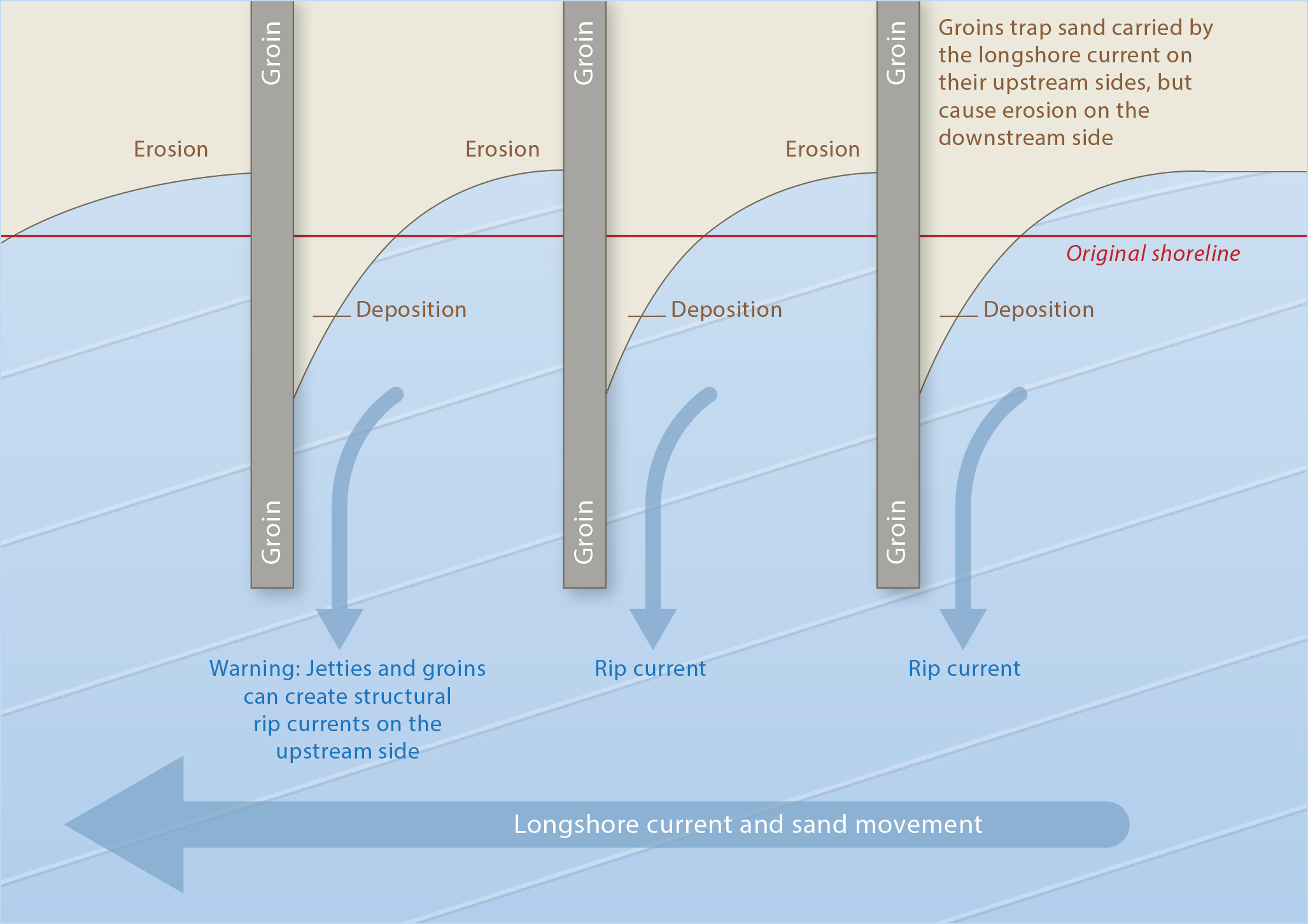
A different but potentially deadly type of rip current can develop around shoreline structures such as jetties and erosion-control groins, often rock or cement walls that extend from the beach into deep water. As the longshore current strikes a groin or jetty, the force of the current forms a strong seaward rip current near the up-current side of the groin. This is why groins, jetties, and fishing piers often carry signs warning people not to swim near the structures.
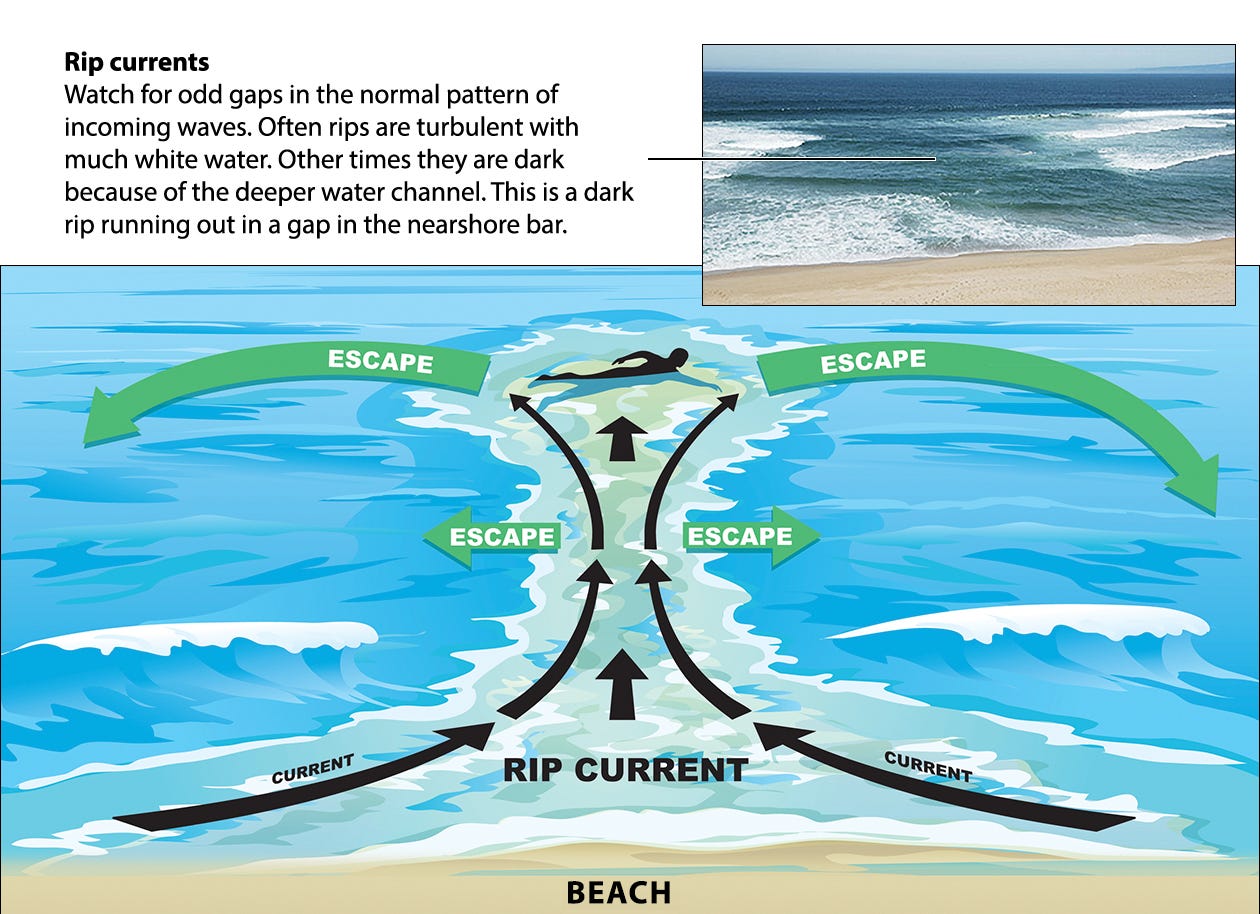
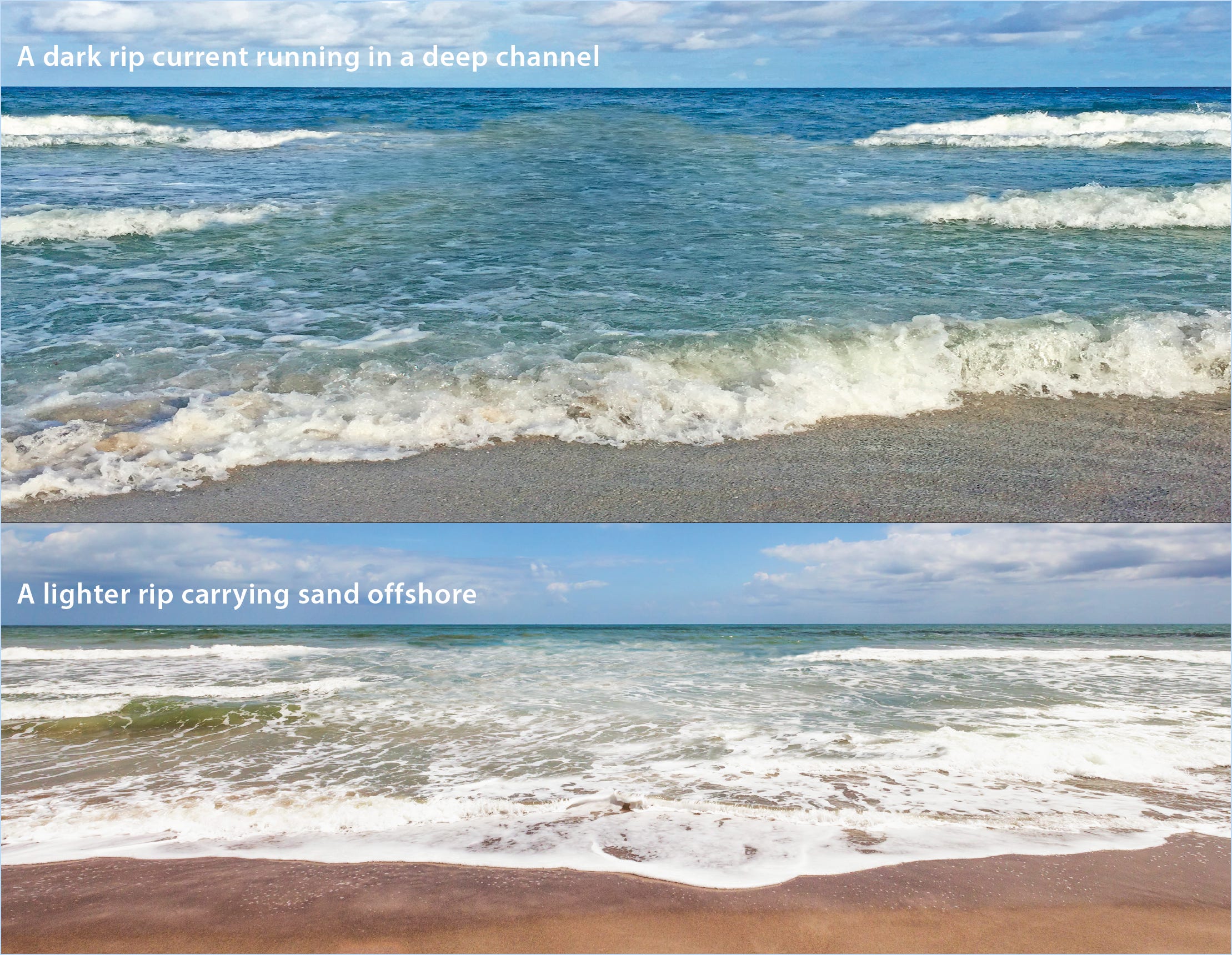
Knowing how to spot a rip current can save your life. Watch for a dark or discolored gap in the normal pattern of breaking waves—rip currents often run through deeper water, giving rips a darker hue, or they may carry suspended sand and silt that lightens their color compared to the surrounding water. Sometimes a strong rip kicks up choppy, churned white water along its edges. In rough conditions, however, a rip current may be completely invisible from shore, so be especially wary whenever large wave sets are running.
If you are caught in a rip current, do not panic and do not try to swim straight back to the beach. Tread water and let the current carry you a short distance; the force of most rip currents dissipates quickly away from shore. Then swim parallel to the beach to exit the main flow, since rip currents are typically narrow channels. Once you are out of the current, swim back to the beach at an angle. Swim only on beaches with lifeguards, and always ask whether any rip currents or other hazards have been reported that day.