
Drawing: Barn Owl
The most cosmopolitan of owls

The Barn Owl (Tyto alba) is perhaps the most cosmopolitan of all owls, found on every continent except Antarctica, yet it remains one of the most ghostly and mysterious presences in any landscape it inhabits. Its heart-shaped facial disc, pale as a winter moon, functions as a parabolic reflector, channeling even the faintest sounds to its asymmetrically placed ears, enabling it to hunt in complete darkness by sound alone.
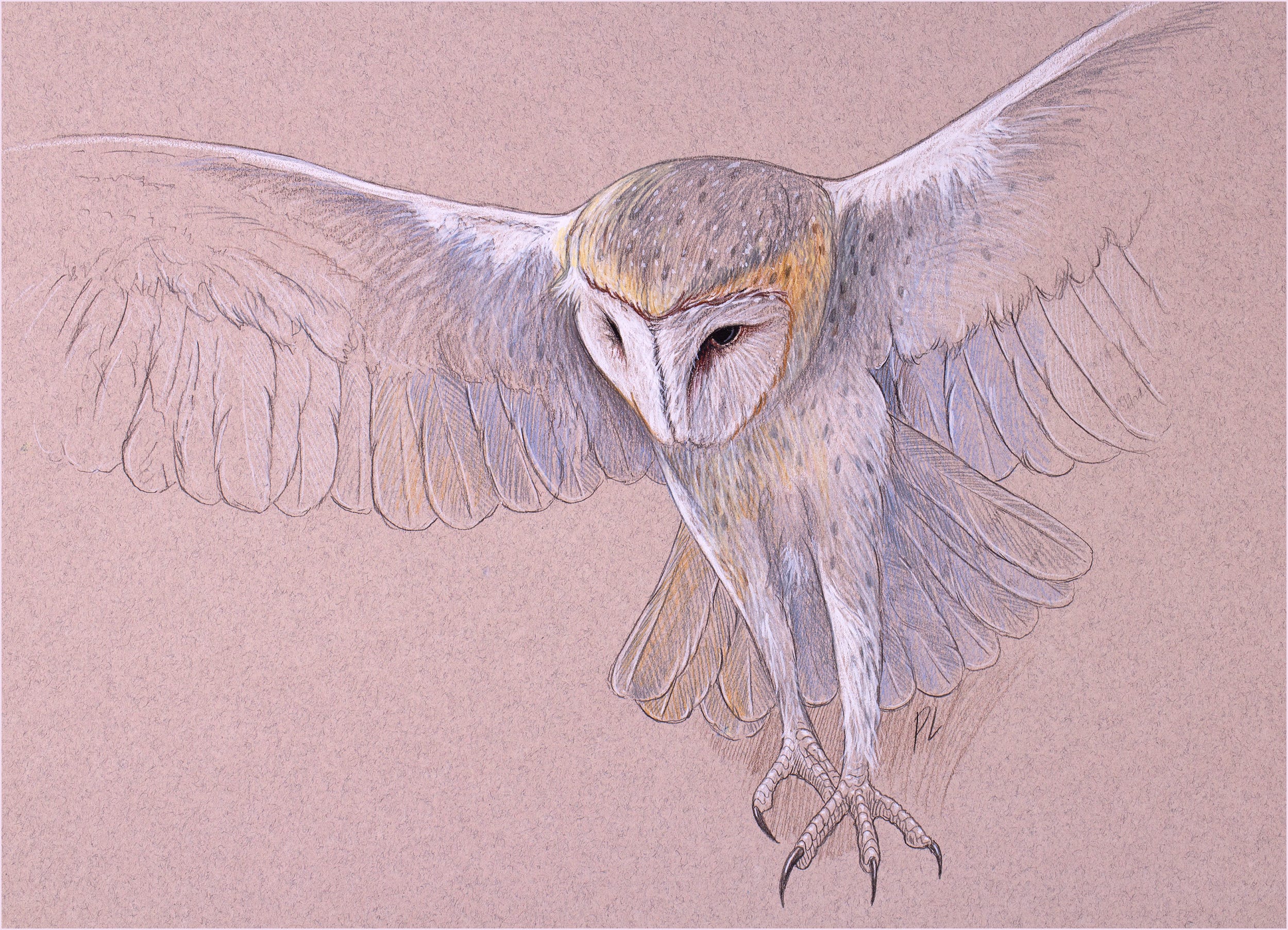
The flight of a Barn Owl is virtually silent, made so by the comb-like serrations on its primary feathers that break up turbulence, and witnesses who see one drift across a dark field often describe the experience as genuinely unnerving.
Barn Owls nest in old farm structures, church steeples, hollow trees, and nest boxes, and a single pair may consume more than a thousand rodents in a year, making them extraordinary allies to farmers and grain growers. Despite this beneficial relationship with human agriculture, Barn Owl populations have declined across much of North America and Europe due to the loss of traditional barns, the spread of modern grain storage, rodenticide poisoning, and road mortality. Conservation programs installing nest boxes along fence lines and hedgerows have achieved local successes, and the Barn Owl remains a touchstone species for anyone working to reconcile farmland management with wildlife preservation.
My recent books and Amazon author page:
